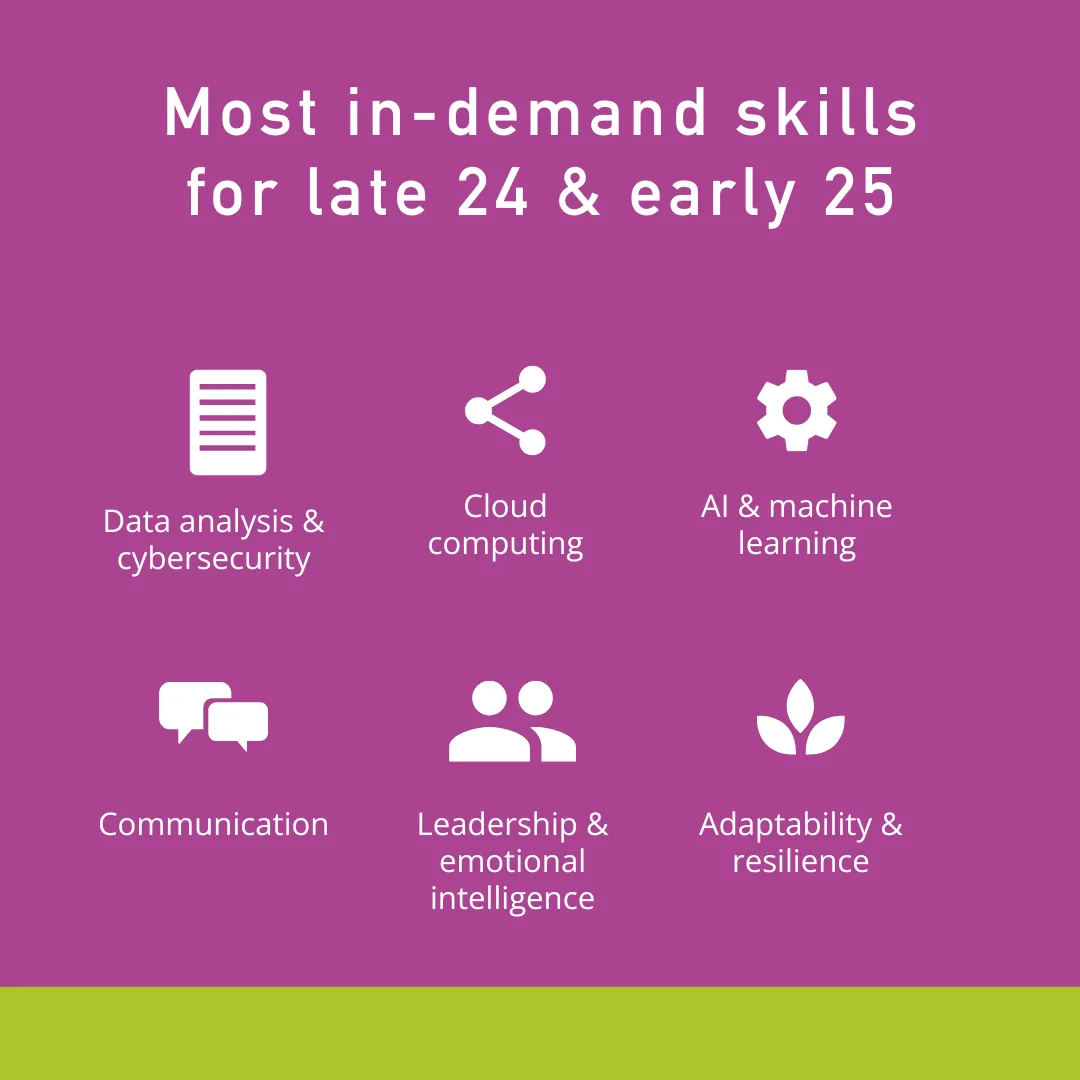
The world of work has changed quickly, and many people are now asking an important question: what skills should I learn to create better career opportunities? A student may be preparing for a first job, while someone already working may feel that their industry is changing. Another person may want to move into a completely new career. In all these situations, learning the right skills can make a real difference. However, choosing which skills to learn is not always easy. Every day, people hear about artificial intelligence, data, digital marketing, cybersecurity, programming, communication, leadership, and many other areas. It can feel impossible to learn everything.
Imagine someone named Daniel who finished his education with a qualification that helped him get an entry-level job. For a few years, the work remained mostly the same. Then new software arrived, the company started using automation, and some of the tasks Daniel performed every day became faster and easier to complete with technology. At first, he worried that his experience would no longer be valuable. But Daniel soon realized that technology was not removing the need for people completely. Instead, the type of work was changing. People who could use new tools, understand information, solve difficult problems, communicate clearly, and adapt quickly were becoming increasingly valuable.
This is an important lesson for anyone thinking about career growth. The most useful skills are not always completely new. Many are existing human abilities that have become more important in a changing workplace. Others are technical skills that help people work with modern technology. The strongest approach is usually to develop a combination of both.
There is also no single list of skills that is perfect for every person. A healthcare professional, software developer, teacher, designer, business owner, and engineer may need very different technical knowledge. Yet certain skills can improve opportunities across many industries. The key is to understand which skills match your interests and career direction rather than simply following every popular trend.
Learning should also be viewed as a long-term habit. The person who learns one skill and stops may struggle when work changes again. Someone who develops the ability to keep learning can adapt throughout their career. This ability may become more valuable than any single software program or technical tool.
Digital and Technology Skills Are Becoming Essential
Technology now affects almost every industry. A person does not need to become a programmer to benefit from digital skills, but understanding how to use modern tools has become important in many careers. Offices, schools, hospitals, factories, retail businesses, and creative industries all depend on technology in different ways.
Basic digital confidence is now a foundation rather than an extra advantage. People need to know how to work with digital documents, online communication tools, cloud platforms, spreadsheets, and modern workplace software. Someone who can quickly understand a new application can often adapt more easily when a company changes its systems.
Data skills are also becoming increasingly useful. Modern organizations collect large amounts of information, but data has little value if people cannot understand it. You do not need to become a data scientist to benefit from learning basic data analysis. Knowing how to organize information, understand patterns, create simple reports, and make better decisions based on evidence can help in many jobs.
Programming and software development remain important career skills for people who enjoy technology and problem-solving. Learning a programming language can open opportunities in web development, mobile applications, automation, software engineering, and other technical fields. However, programming is not the only route into technology. Areas such as user experience, software testing, cloud services, digital product management, and technical support also require different combinations of skills.
Artificial intelligence is another area that is changing how people work. The ability to understand AI tools and use them effectively can become valuable in many professions. This does not necessarily mean learning to build complex AI systems. A teacher may use AI to support lesson planning, a writer may use it for research and organization, and a business professional may use it to analyze information or automate repetitive work. The important skill is learning how to use technology thoughtfully rather than depending on it without understanding its limitations.
Cybersecurity is also becoming more important as businesses and individuals rely increasingly on digital systems. Technical cybersecurity specialists need advanced knowledge, but basic security awareness is useful for everyone. Understanding passwords, online threats, privacy, phishing attempts, and safe digital practices can protect both individuals and organizations.
The larger lesson is that technology skills should be connected to your career direction. A designer may benefit more from learning modern design tools and AI-assisted workflows than from studying advanced network administration. A marketing professional may gain more from understanding analytics and digital advertising than from learning software engineering. Choosing skills with a clear purpose makes learning more effective.
Human Skills Will Remain Important in Every Career
As technology becomes more powerful, human skills may become even more valuable. Machines can process information quickly, but many important parts of work still depend on people. Communication, creativity, empathy, judgment, leadership, and the ability to work with others remain difficult to replace.
Communication is one of the most useful skills in almost any career. A person may have excellent technical knowledge but struggle to explain an idea clearly. Someone who can communicate well can make complex information easier to understand, build stronger professional relationships, and work more effectively with colleagues and clients.
Good communication involves more than speaking. Writing clearly is important in a world filled with emails, messages, reports, proposals, and digital communication. Listening is equally important. People who listen carefully often understand problems better and make fewer assumptions.
Teamwork is another valuable skill because many modern jobs involve working with people from different backgrounds and areas of expertise. A project may include designers, developers, marketers, managers, and customers. Success often depends on how well these people can share ideas and work toward the same goal.
Problem-solving is also highly valuable. Employers do not only need people who can follow instructions. They need people who can understand a problem, examine possible solutions, and take sensible action. Strong problem-solvers know when to work independently and when to ask for help.
Adaptability has become especially important because workplaces continue to change. New technology, business models, customer needs, and working methods can change quickly. People who remain open to learning and are willing to adjust their approach can often manage these changes better.
Creativity should not be seen only as an artistic ability. Creativity can mean finding a new solution, improving a process, seeing a problem from a different angle, or combining existing ideas in a useful way. Businesses need creative thinkers in technology, education, healthcare, engineering, marketing, and many other fields.
Leadership is another skill that can improve career opportunities, even for people who do not manage a team. Leadership can involve taking responsibility, making decisions, helping others, and moving a project forward. A person can demonstrate leadership at almost any stage of a career.
Learn Skills That Help You Work With Information and Change
One of the biggest changes in modern careers is the growing amount of information available to workers. People are surrounded by reports, messages, numbers, research, online content, and automated tools. The ability to think carefully about information is becoming increasingly important.
Critical thinking helps people examine information before accepting it as true. This skill can be useful when making business decisions, reading research, evaluating online information, or using AI-generated content. People who can ask good questions and examine different possibilities are often better prepared to solve complex problems.
Research skills are closely connected to critical thinking. Knowing how to find reliable information, compare different sources, understand the main points, and apply what you learn can support better decision-making. These skills are valuable for students and professionals across many industries.
Project management is another useful skill because work often involves deadlines, people, budgets, and changing priorities. A project does not always need a formal project manager. Many employees need to organize tasks, communicate progress, identify risks, and complete work on time.
Time management is equally important. Modern work environments can include constant messages, meetings, and distractions. The ability to focus on important tasks and manage time effectively can improve both productivity and professional reliability.
Financial awareness can also support career growth. Even people who are not accountants or financial professionals benefit from understanding basic concepts related to budgeting, costs, profit, and financial decision-making. This is especially useful for managers, entrepreneurs, and professionals who want to understand how their work affects an organization.
Another important skill is the ability to learn independently. In the past, people often expected formal education to provide most of the knowledge needed for a career. Today, formal education remains valuable, but it may not be enough on its own. Industries can change faster than traditional courses.
A person who can identify a skill gap, find useful learning resources, practice regularly, and apply new knowledge has a strong advantage. This habit of continuous learning can help someone remain relevant throughout a long career.
Build a Skill Combination That Fits Your Career Goals
The strongest career opportunities often come from combining skills rather than mastering one area in isolation. A person who understands technology and communicates well may have opportunities that are different from someone who has only technical knowledge. A designer who understands business can approach problems differently from a designer who focuses only on visual work.
Imagine Daniel again. Instead of trying to learn every new technology, he starts by looking at the type of work he wants to do. He discovers that his industry is using more data and automation. He begins by improving his spreadsheet and analytical skills. He then learns how to use AI tools responsibly and develops stronger presentation skills so he can explain his findings to others.
Over time, Daniel becomes more valuable because he combines several abilities. He understands his field, can work with technology, can analyze information, and can communicate clearly. None of these skills alone completely changed his career. Together, they created new opportunities.
The same idea can help anyone create a personal learning path. Start by identifying your main career direction. Then look at the skills that are most important in that field. Next, identify the gaps between what you know and what you need to learn. You do not have to learn everything at once.
Practical experience should also be part of skill development. Watching videos or completing courses can build knowledge, but applying what you learn is what helps turn knowledge into ability. A portfolio, personal project, internship, volunteer experience, or real work assignment can demonstrate that you can use a skill in practice.
It is also important to update your skills over time. A skill that is highly useful today may change as new tools appear. This does not mean your previous learning becomes useless. Strong foundational knowledge often makes it easier to understand the next generation of tools.
When choosing what to learn, think about both the present and the future. Some skills may help you get a job quickly, while others may support long-term career growth. The best choice often combines practical career value with genuine personal interest.
You do not need to become an expert in every important skill. A focused approach is usually better. Build strong knowledge in your main area, develop useful related skills, and strengthen the human abilities that can support you in almost any career. Learn to work with technology instead of fearing it. Learn to communicate instead of assuming your work will speak for itself. Learn to adapt instead of expecting your industry to remain unchanged.
Better career opportunities are rarely created by waiting for the perfect moment. They often begin when a person recognizes a changing world and decides to keep learning. The skills you develop today may open opportunities you cannot yet see. The most valuable habit is not simply learning what is popular now. It is becoming someone who can continue learning, improving, and adapting throughout life.