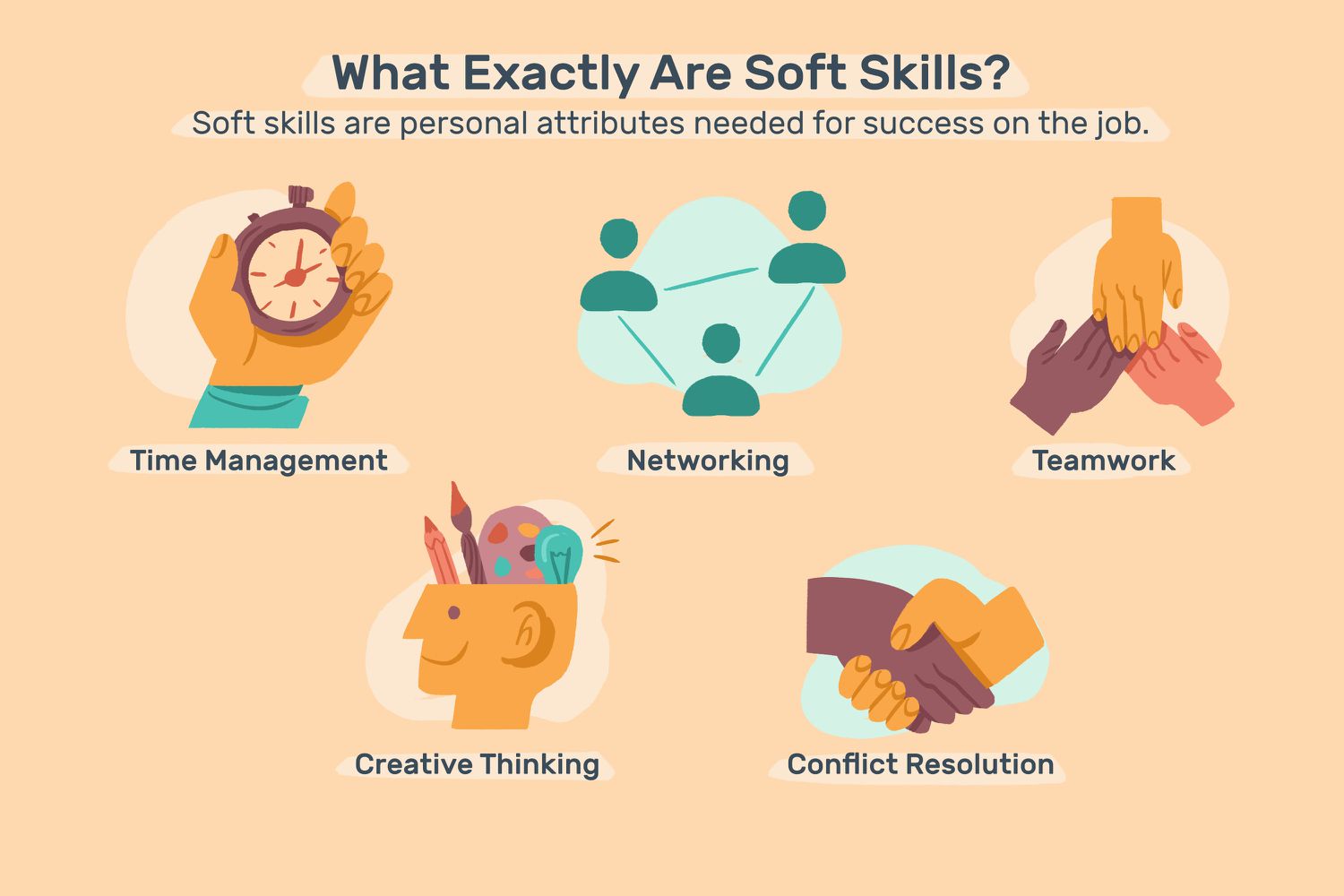
Soft skills can quietly influence almost every stage of a person’s life and career. A student may have excellent knowledge but struggle to explain ideas during a presentation. A professional may have strong technical abilities but find it difficult to work with colleagues. Another person may understand their job perfectly but lose opportunities because they cannot adapt to change or manage responsibilities effectively. In many situations, success depends not only on what you know, but also on how you use your knowledge and work with other people.
Imagine a student named Alex who is highly capable in academics. Alex completes assignments on time, understands difficult subjects, and often receives good results. After graduation, Alex gets an opportunity to work with a team for the first time. The experience is different from working alone. Team members have different opinions, meetings require clear communication, and problems do not always have one correct answer.
Alex soon realizes that professional success requires another set of abilities.
These abilities are commonly called soft skills. They include communication, teamwork, problem-solving, adaptability, emotional awareness, time management, and other qualities that help people work effectively. Unlike a technical skill, a soft skill is often not connected to one particular job or industry. The same ability can remain useful across many different careers.
A software developer may need communication skills to explain a technical problem. A teacher may need empathy and patience. A manager may need leadership and decision-making. A business professional may need negotiation skills. Even people who work independently need discipline, adaptability, and the ability to manage their time.
Soft skills can also become more valuable as a person’s career develops. Technical knowledge may help someone perform a specific task, but greater responsibilities often require the ability to lead people, communicate clearly, solve complex problems, and handle difficult situations.
The good news is that soft skills are not fixed qualities that a person either has or does not have. They can be developed through awareness, practice, feedback, and experience.
Communication Helps Turn Knowledge Into Understanding
Communication is one of the most useful skills a person can develop. It affects education, employment, relationships, and everyday life.
Strong communication does not simply mean speaking a lot or using impressive words. It means helping another person understand what you are trying to communicate.
Alex learns this during a group project. Alex understands the subject well but explains ideas in a complicated way. Some team members become confused. At first, Alex assumes that the others simply need to pay more attention.
Then Alex changes the approach.
Instead of using complex language, Alex begins explaining the main idea in simple steps. Questions are encouraged, and everyone has an opportunity to share their perspective.
The project improves.
This experience teaches an important lesson. Communication is not complete when you have spoken. It is complete when the message has been understood.
Written communication is also important. Emails, reports, applications, proposals, and messages can create a professional impression.
Clear writing usually requires more than correct grammar. It also requires thinking about the reader. What information do they need? What is the main point? What action should they take?
Listening is another essential part of communication. Many people focus on learning how to speak confidently but forget that listening can provide equally important information.
Active listening involves paying attention, asking useful questions, and trying to understand the other person’s point of view.
Communication also requires adjustment. You may explain the same subject differently to a colleague, customer, manager, or student.
A person who can understand the audience and choose the right approach can communicate more effectively.
Public speaking is another useful area for development. Not everyone needs to enjoy standing in front of a large audience, but most people will eventually need to explain an idea to others.
The best way to improve is through practice. Small opportunities can gradually build confidence.
Teamwork and Emotional Awareness Help You Work With People
Most students and professionals will work with other people at some point. Even an independent professional may need to communicate with clients, customers, suppliers, or collaborators.
This makes teamwork an important soft skill.
Working in a team does not mean agreeing with everyone. Teams often include people with different experiences, working styles, and opinions.
The ability to cooperate while handling these differences can make a significant difference.
Alex experiences this when one member of the group disagrees with an important decision. At first, Alex sees the disagreement as a problem. Later, Alex realizes that the other person has noticed something important that the rest of the group missed.
The disagreement improves the final result.
This is why respect is important in teamwork. You do not need to agree with every opinion, but you should be willing to consider different perspectives.
Emotional awareness also helps people understand their own reactions and the emotions of others.
Imagine receiving criticism on a project you worked hard to complete. An immediate emotional reaction may be frustration or disappointment. But a person with emotional awareness can pause and examine the feedback before responding.
This does not mean ignoring emotions. It means understanding them and deciding how to respond.
Empathy is closely connected to this ability. It involves making an effort to understand how another person may see a situation.
A manager who understands why a team member is struggling may find a better solution. A customer service professional who understands a customer’s frustration may communicate more effectively. A student who recognizes that a teammate is facing difficulties may help the group work together.
Conflict management is another useful skill. Disagreements are normal, especially when people care about their work.
The goal is not to avoid every conflict. It is to handle disagreements respectfully.
Focus on the problem rather than attacking the person. Listen to different perspectives and look for solutions when possible.
These skills can make people easier to work with, but they also help create stronger and more productive professional relationships.
Problem-Solving and Adaptability Prepare You for Change
Real-world problems are often different from classroom problems. A student may be given a clear question and expected to find the correct answer. In the workplace, the problem itself may not be clearly defined.
Alex discovers this during an internship. A project is delayed, and no one knows exactly why. Different people offer different explanations.
Instead of immediately choosing one answer, Alex begins gathering information.
What has changed? Where is the delay happening? What information is missing? What are the possible solutions?
This is the beginning of effective problem-solving.
Good problem-solvers do not always have immediate answers. They know how to understand a situation, ask questions, collect information, and evaluate different options.
Critical thinking supports this process. It involves examining information carefully instead of accepting the first explanation.
Creativity can also help. A difficult problem may require a solution that is different from the methods used in the past.
Adaptability is another essential skill because change is a normal part of modern education and work.
New technology, new responsibilities, and unexpected situations can require people to learn quickly.
Alex initially feels uncomfortable when asked to use an unfamiliar tool. Instead of avoiding it, Alex begins learning the basics.
The experience builds confidence.
Adaptability does not mean changing your opinion every time something new appears. It means being willing to consider new information and adjust when necessary.
Resilience is closely connected to adaptability. Students and professionals will experience failure, rejection, mistakes, and difficult periods.
A person may not receive a job offer, a project may fail, or a business idea may not work as expected.
Resilience is the ability to recover, learn, and continue moving forward.
It does not mean pretending that failure does not matter. It means using the experience to understand what can be improved.
People who develop resilience can often face uncertainty with greater confidence.
Time Management and Self-Discipline Turn Potential Into Progress
Many people have useful skills and good ideas but struggle to use them consistently.
A student may plan to study but become distracted. A professional may know what needs to be completed but keep postponing important tasks.
This is where time management and self-discipline become valuable.
Time management is not simply about completing more work in less time. It is about understanding what matters and using your available time with purpose.
Alex begins by making a long list of tasks. The list quickly becomes overwhelming. Then Alex learns to separate urgent tasks from important long-term responsibilities.
This makes it easier to decide where to focus.
Planning can help, but plans should remain flexible. Unexpected responsibilities will appear.
A good system should help you recover when a day does not go as expected rather than making you feel that the entire week has failed.
Self-discipline helps turn plans into action. Motivation can be useful, but motivation is not always reliable.
There will be days when you do not feel like studying, practicing, or completing a difficult task.
Self-discipline helps you continue even when motivation is low.
Accountability is also useful. Taking responsibility for your work means recognizing both successes and mistakes.
It is easy to blame circumstances when something goes wrong. Sometimes external factors are genuinely responsible. But it is also important to ask what you could have done differently.
A professional who can accept responsibility and learn from mistakes can build trust.
Reliability is another important quality. People want to work with someone who communicates clearly, completes responsibilities, and provides honest information when a problem occurs.
Over time, Alex develops a stronger understanding of professional success. Good academic knowledge remains important, but knowledge alone does not determine how effectively a person works.
Communication makes knowledge easier to share. Teamwork helps people achieve goals together. Emotional awareness and empathy strengthen relationships. Problem-solving and adaptability help people manage change. Time management and self-discipline turn ability into consistent action.
These skills do not need to be mastered all at once.
Choose one area that you want to improve. Look for situations where you can practice it. Ask for useful feedback and pay attention to your progress.
A group project can help you practice teamwork. A presentation can improve communication. A difficult task can strengthen problem-solving. A new responsibility can develop adaptability.
Soft skills often develop slowly because they are built through real experiences.
The goal is not to become a perfect professional. Everyone has areas where they feel confident and areas where they need more development.
What matters is recognizing that success depends on more than technical knowledge. Your ability to communicate, work with others, respond to challenges, and manage yourself can influence almost every opportunity you receive.
Alex’s strongest growth begins after understanding this. Academic ability remains an important foundation, but soft skills help turn that foundation into professional success.
The skills you develop today can remain useful throughout your career, even as industries and technology change. Tools may become outdated, job titles may change, and new technologies may appear, but the ability to work effectively with people and adapt to new situations can continue creating opportunities.
Learning how to develop these skills is therefore not an extra part of career preparation. It is part of becoming someone who is ready to contribute, grow, and succeed in an ever-changing professional world.