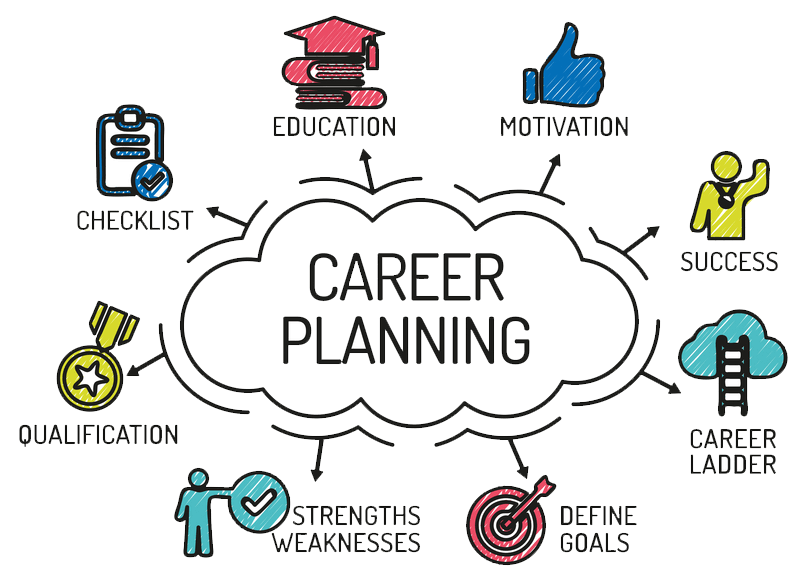
For many students, thinking about the future can feel exciting and frightening at the same time. One day, the future seems full of possibilities. There are many subjects to study, skills to learn, jobs to explore, and places to work. On another day, having so many choices can become confusing. A student may look at friends who appear to know exactly what they want and wonder why they still feel uncertain. They may feel pressure from family, teachers, social media, or society to choose a career quickly. Questions such as “What will you become?” and “What are you going to do after graduation?” can begin to feel more difficult than expected.
Imagine a student named Sofia who is in her final years of school. She enjoys science but also likes writing. She performs well in mathematics but is interested in working with people. Some family members suggest medicine because she gets good grades. Her friends talk about technology because they believe it offers more opportunities. Sofia searches for career advice online and finds thousands of possible choices. Instead of feeling clearer, she becomes more confused.
This is where career planning can help. Career planning is not about choosing one job and creating a fixed plan for the rest of your life. It is a process of learning about yourself, understanding possible opportunities, making informed decisions, and taking small steps toward a future that matches your goals. A good career plan can change when you discover new interests or when the world of work changes.
The idea of a “perfect career” can also create unnecessary pressure. Most people do not discover one perfect job and follow a straight path toward it. They learn, change, make decisions, gain experience, and sometimes take unexpected opportunities. A person may begin in one role and later discover a completely different area that suits them better.
Career planning gives students a direction, but it should not become a prison. The purpose is to help you move forward with more confidence while remaining flexible enough to change when new information appears. Instead of asking, “What job will I do for the rest of my life?” it can be more useful to ask, “What direction should I explore next?”
Start by Understanding Yourself
The first step in career planning is not searching for job titles. It is understanding yourself. Before looking at possible careers, take time to consider your skills, interests, personality, values, and goals.
Skills are a useful place to begin. Think about what you are good at and what you find easier to learn. You may be good at solving mathematical problems, writing clearly, explaining ideas, creating designs, organizing tasks, working with technology, listening to others, or understanding how things work.
Do not focus only on school marks. Academic performance can provide useful information, but it does not show every ability. A student who is average in examinations may have strong creativity, leadership, communication, or practical skills. Another student may perform well academically but still need time to discover what type of work they enjoy.
Interests are equally important. Ask yourself what topics naturally attract your attention. What do you enjoy learning about even when no one tells you to study it? What activities make you curious enough to keep exploring?
Sofia begins to notice that she enjoys understanding scientific ideas, but she also likes explaining them to other people. She enjoys researching a topic and then turning complex information into something easier to understand. These interests suggest that she may have more possible career paths than she originally believed.
Your personality can also influence career satisfaction. Some people enjoy meeting new people and working in teams. Others prefer independent work and long periods of concentration. Some enjoy predictable routines, while others prefer variety and change.
There is no personality type that is better than another. The important thing is understanding how you work best. A career may require you to develop new abilities, but choosing an environment that strongly conflicts with your natural preferences can make work more difficult over time.
Values also matter. Some people care deeply about helping others. Others want financial security, creative freedom, independence, recognition, stability, or the opportunity to solve difficult problems. Most people have several values, and their importance may change over time.
Career planning becomes more meaningful when you understand what success means to you. A successful career does not have exactly the same meaning for everyone.
Explore Career Options Before Making Big Decisions
Once you understand yourself better, you can begin exploring career options. This stage should be based on curiosity rather than pressure. Students often make the mistake of choosing a career before learning enough about it.
A job title can be misleading. A person may hear the word “engineer,” “designer,” “teacher,” “doctor,” or “marketing professional” and imagine a certain type of work. The reality may be very different.
It is useful to look beyond the title and understand what people actually do during a normal working day. What problems do they solve? What skills do they use? Do they work mainly with people, information, technology, or physical objects? What education is required? What kind of working environment is common?
Sofia begins by exploring several areas instead of immediately choosing one. Because she enjoys science, she looks at healthcare and research. Because she likes communication, she also explores science education and technical communication. She discovers that her combination of interests can lead to many different paths.
Students should remember that one interest does not always lead to one career. A person who enjoys technology might work in software development, cybersecurity, digital design, data analysis, technical support, product management, or technology education.
The same is true for almost every field. A person interested in business could work in finance, marketing, human resources, operations, sales, entrepreneurship, consulting, or many other areas.
This is why exploration is so important. Before rejecting a career or deciding that it is your only option, learn more about it.
Real experiences can provide some of the best information. An internship, volunteer project, personal project, student activity, or conversation with someone in a field can show you what the work is actually like.
Students do not always need to wait for a formal opportunity. A small personal project can help test an interest. Someone interested in programming can try building something simple. A student interested in writing can create a collection of articles. Someone interested in business can study how a local or online business solves problems.
The purpose is not to become an expert immediately. It is to learn enough to answer an important question: do I want to explore this further?
Turn Your Career Goals Into Practical Steps
After exploring different possibilities, students can begin creating a practical plan. This does not need to be a detailed plan for the next twenty years. A shorter plan with clear next steps is often more useful.
Sofia realizes that she is interested in careers that combine scientific knowledge with communication. Instead of deciding on every future step immediately, she identifies what she can do now. She can focus on relevant subjects, improve her research skills, strengthen her writing, and look for opportunities to explain complex topics to others.
This is the central idea of good career planning. Start with the future you are interested in, then work backward to identify what you can do today.
Education is usually one part of the process. Research what subjects, courses, qualifications, or training may be useful for the career paths you are considering. However, do not assume that a qualification alone will automatically make you job-ready.
Many careers also require practical skills. Depending on your goals, you may need to develop communication, digital, technical, analytical, creative, or management abilities.
Students should choose a few important skills and develop them gradually. Trying to learn everything at once can lead to confusion. A focused approach creates better progress.
For example, someone interested in data analysis might begin by improving spreadsheet skills and learning basic data concepts. Someone interested in design may start by developing fundamental design knowledge and creating simple projects. A student interested in teaching could work on communication and presentation skills.
Experience should also become part of the plan. Do not wait until graduation to start building practical experience. Internships, part-time work, volunteering, freelance projects, and student organizations can all provide useful lessons.
These experiences can also help you discover what you do not want. This is valuable information. Realizing that a career is not a good match before making a major commitment can help you choose a better direction.
Career planning should also include regular progress checks. Every few months, ask whether your interests have changed, whether you have developed new skills, and whether your career direction still feels meaningful.
A plan should guide you, not control you. If you discover a better opportunity or learn something important about yourself, it is acceptable to change direction.
Build a Future Through Action, Learning, and Flexibility
Career planning becomes useful when it leads to action. A student can spend years thinking about the perfect future, but clarity often comes only after taking practical steps.
Sofia begins by setting small goals. She works on a research project, improves her communication, and looks for opportunities to learn outside her regular classes. None of these steps completely determines her future, but each one gives her more information.
After some time, Sofia begins to feel less worried about choosing one exact career. She understands that her future will probably develop through a series of decisions rather than one perfect choice.
Students should learn to think in the same way. You do not need to have every answer today. You only need enough understanding to choose a useful next step.
The ability to adapt will become increasingly important throughout a career. Technology changes, industries develop, and new roles appear. A career plan that is too rigid may become difficult to follow when circumstances change.
Instead of becoming attached to one job title, focus on developing abilities that can support you in different situations. Communication, problem-solving, digital confidence, adaptability, teamwork, and the ability to learn can remain useful across many careers.
Networking and professional relationships can also support career development. Students do not need to wait until they have a job to begin learning from others. Teachers, mentors, professionals, classmates, and former students can provide different perspectives and opportunities.
A conversation can sometimes reveal a career option you had never considered. It can also provide a realistic understanding of the challenges involved in a particular field.
Students should also learn not to compare their career journey too closely with others. One person may know their preferred career very early. Another may need years of exploration. One person may go directly from education into a chosen profession, while another may discover their strongest career after several different experiences.
Sofia’s journey may look different from her friends’ journeys, and that is not a problem. By understanding herself, exploring different options, developing relevant skills, and gaining experience, she is creating a strong foundation for the future.
Career planning is not about predicting everything that will happen. The future is too uncertain for that. It is about becoming prepared enough to make good decisions when opportunities and challenges appear.
A better future is built through many small decisions. Choosing a useful subject, learning a new skill, completing a project, asking for advice, applying for an internship, or exploring a new interest may seem like small actions. Over time, they can create a clearer direction.
The most important thing for students to remember is that uncertainty does not mean failure. It simply means there is more to discover. A strong career plan begins with self-understanding, grows through exploration, and becomes stronger through action.
You do not need to know exactly where every road will lead. Start by learning who you are, what interests you, what skills you need, and what opportunities are available. Then take the next step. As you continue learning and gaining experience, the future that once seemed confusing can gradually become a path you understand and feel confident about.